
The cheapest free zone in the UAE is not always the one advertising the lowest licence fee. That may sound unusual at first, but the real picture becomes clear when you calculate the full first-year cost.
Many market comparisons highlight entry-level packages starting between AED 5,000 and AED 5,750. But those prices often change significantly once you include visas, workspace requirements, and the actual business activities you need. This is why a package that looks cheaper on paper can end up costing more overall for the wrong type of founder.
This is where many business owners make costly mistakes. They compare brochure prices instead of comparing business models. A freelancer with no visa requirements and minimal overhead is buying something very different from a consultancy that needs employee visas, banking support, and a wider activity scope even if both are sold as “free zone licences.”
At the early planning stage, the better question is not Which free zone is the cheapest? but rather Which free zone offers the lowest total cost without forcing expensive changes later?
Why the Cheapest UAE Free Zone Is Often Not the Cheapest
A low-cost licence can be a smart starting point — but it can also turn into an expensive mistake.
The issue is simple: many founders focus only on the first payment, while the real cost of running the business unfolds over the entire first year. Visa quotas, office requirements, establishment cards, compliance obligations, and business activity limitations all influence the final cost. If a package looks affordable only on paper but cannot support your actual needs, it is not truly the cheapest option.
For example, a solo founder with no visa requirement and a limited service activity may benefit from a basic setup. But a business owner planning to hire staff, build stronger client credibility, or operate across multiple activities may end up paying far more later if they start with the lowest-tier package.
A practical rule: if a free zone package looks significantly cheaper than every other option, review carefully what is not included before making your decision.
There is also a bigger reason why this confusion continues. The UAE free zone market is not a single standardised system. It is a competitive ecosystem that has developed over decades. The country’s first free zone, Jebel Ali Free Zone, was established in 1985, and today the UAE has more than 40 active free zones, each with its own pricing models, licence structures, and facility options.
This competition creates real opportunities for budget-friendly setups, but it also leads to misleading comparisons when founders assume every package offers the same long-term value.
The better way to compare is through a total-cost perspective. Start with your business activity, then your visa requirements, workspace needs, and tax or compliance obligations. The right structure should shape the cost — not the other way around.
Understanding the Real Cost of a Free Zone Company
The licence fee is often the least dependable number in a free zone quote.
What really matters is the total cost of ownership over the first year — and in many cases, the second year as well.
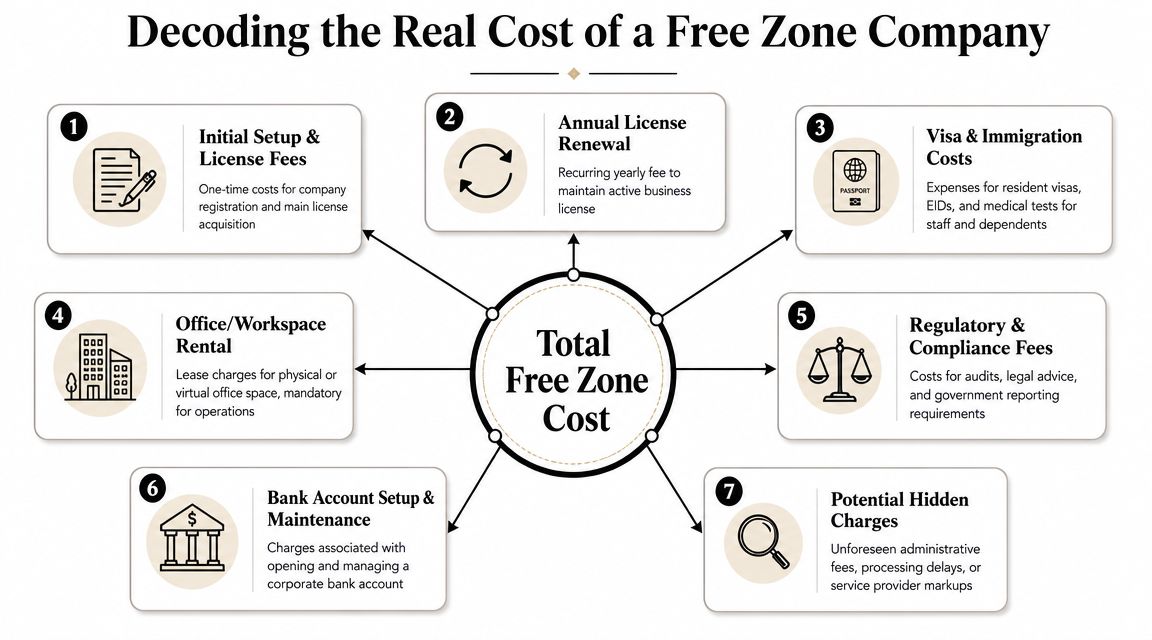
A package may look affordable at the start, but once owner visas, employee visas, establishment card fees, medical checks, Emirates ID charges, workspace upgrades, annual renewals, and compliance costs are added, it can quickly become one of the more expensive choices.
This is where many founders make the wrong comparison. Looking only at the advertised licence fee often means comparing incomplete offers rather than the true cost of operating the business.
Why Free Zone Costs Vary So Much
Not all free zones price their packages the same way because they are not offering the same setup structure.
One free zone may advertise a low starting price built around a single business activity, no visa quota, and a simple flexi-desk arrangement. Another may charge a higher upfront fee because the package includes multiple activity options, greater visa capacity, or office facilities that create fewer limitations as the business grows.
This is why names like Sharjah Research Technology and Innovation Park and Ajman Free Zone frequently appear on founders’ shortlists. They are known for entry-level packages that work well for solo entrepreneurs, freelancers, and service-based businesses — especially where a shared workspace or flexi-desk model is enough.
But the details behind these packages matter far more than the advertised starting price. Those details determine what your company will actually be able to do after incorporation, and whether the setup will still support your needs six or twelve months later.
The Cost Factors Founders Should Review Before Signing
A proper cost review should break the package into separate parts rather than relying on one bundled figure.
Base licence fee:
This covers company registration and the business licence itself. It often excludes the costs that have the biggest long-term impact.
Visa and immigration expenses:
Owner visas, employee visas, establishment cards, status changes, medical tests, and Emirates ID fees can quickly push the total cost far beyond the licence fee.
Workspace requirements:
A flexi-desk or virtual office keeps the entry cost low, but future visa allocations and team growth may require a facility upgrade.
Renewal charges:
Some free zones are affordable to enter but more expensive to renew. Renewal costs should be reviewed with the same attention as the initial setup.
Compliance and tax administration:
Corporate tax registration, bookkeeping, audit obligations, and ownership disclosures can create recurring costs, even for small businesses.
Banking practicality:
If your business activity, shareholder structure, or chosen free zone creates extra questions for banks, the hidden cost becomes time. Banking delays can slow invoicing, payroll setup, and operations.
Future amendments:
Adding business activities, changing shareholders, increasing visa quotas, or upgrading office facilities usually comes with extra charges.
Low-cost packages are often designed for a very specific type of founder — usually one shareholder, no immediate employees, limited activities, and minimal workspace needs.
But once your business plan includes hiring staff, bringing dependants, handling regular banking transactions, or operating across broader commercial activities, the low starting price often stops being the most useful way to compare.
A smarter approach is to ask for a fully itemised quote that separates licence fees, visa costs, facility charges, government fees, and annual renewals. If a provider cannot clearly explain where each dirham is being spent, the package may be too unclear to evaluate properly.
The Leading Low-Cost Free Zone Options for 2026
In practice, the cheapest free zone is usually the one that remains affordable even after visas, office upgrades, and annual renewals are added.
Based on entry-level pricing, three names continue to stand out in founder discussions for 2026:
-
Ajman Free Zone
-
Sharjah Media City (SHAMS)
-
Sharjah Research Technology and Innovation Park
Each can be a strong option depending on the business model. But each can also become expensive if the package doesn’t match the company’s actual operating needs.
Early Comparison Table
| Free Zone | Starting License Fee | Included Visas | Office Requirement | Best For |
|---|---|---|---|---|
| Ajman Free Zone | Low entry pricing in basic packages | Package-dependent | Depends on package and visa need | Solo service businesses, founders focused on minimum launch spend |
| Sharjah Media City (SHAMS) | Low entry pricing for selected activities | Package-dependent | Light facility requirement for certain setups | Media, digital, creator, and remote-first businesses |
| SRTIP | Slightly above the very lowest entry tier in some packages | Package-dependent | Often flexible at entry stage | Consultants, tech-led firms, and founders who want a more scale-ready profile |
Sharjah Media City (SHAMS)
Sharjah Media City (SHAMS) remains a popular low-cost choice because it removes one of the largest startup expenses: traditional office space. For founders in creative or digital sectors, this can significantly reduce first-year costs and preserve cash flow. Its advantage is not just the licence fee itself, but the lighter operating structure it allows at the beginning.
SHAMS is often a strong fit for service-based businesses that generate revenue through expertise rather than physical products. This includes content creators, marketing agencies, designers, trainers, and solo consultants who want a lean setup without paying for office space they may not need.
The trade-off usually appears later. If the company plans to increase visa allocations, expand into more business activities, or needs a more traditional setup for smoother banking relationships, the initial savings may reduce over time. That is why founders should review not only the first-year package but also the renewal and growth structure before deciding.
Ajman Free Zone
Ajman Free Zone is often chosen by founders looking for the lowest possible entry cost and who are comfortable prioritising affordability over prestige. For a simple service-based company with one shareholder and a narrow activity scope, it can be one of the most cost-efficient ways to establish a business in the UAE.
Its appeal comes from simplicity. The setup is often suitable for businesses that mainly need a legal licence, basic visa processing, and a compliant business presence without many extra requirements.
The challenge comes when the business needs more than that. Founders who expect frequent client meetings, want a stronger business address, or anticipate more detailed bank reviews may find the early savings replaced by later costs through upgrades, amendments, or operational delays. Ajman works best when the business model is intentionally straightforward.
Sharjah Research Technology and Innovation Park
Sharjah Research Technology and Innovation Park is not always the cheapest option at the entry stage, but it often delivers better value over the longer term for the right type of founder.
It is especially attractive for consultancy, technology, education, and innovation-focused businesses that want a cost-effective setup while maintaining a stronger corporate image than a typical freelance-style structure.
This difference matters. Some founders need low setup costs, but they also want a business profile that can grow smoothly as they hire employees, add services, or present the company to investors and larger clients. In these cases, paying slightly more at the beginning can reduce the need for expensive restructuring later.
For businesses planning growth beyond a solo model, SRTIP often becomes the more cost-efficient option when measured over two years rather than just the first licence payment.
How These Options Compare in Practice
Each of these free zones performs differently depending on the business model.
-
Ajman Free Zone usually offers the lowest entry-level setup cost.
-
Sharjah Media City (SHAMS) is often the better fit for remote-first media and service businesses that want to avoid unnecessary office expenses.
-
Sharjah Research Technology and Innovation Park tends to offer the best balance between affordability and long-term business positioning.
That is the comparison founders should focus on. The right free zone is not always the one with the lowest number in the sales proposal. It is the one that keeps renewals, visas, banking, and future operational changes from turning an affordable setup into an expensive adjustment.
Matching the Cheapest Zone to Your Business Model
A low-cost licence only stays cost-effective when the company structure matches how the business is expected to operate over the next 12 to 24 months.
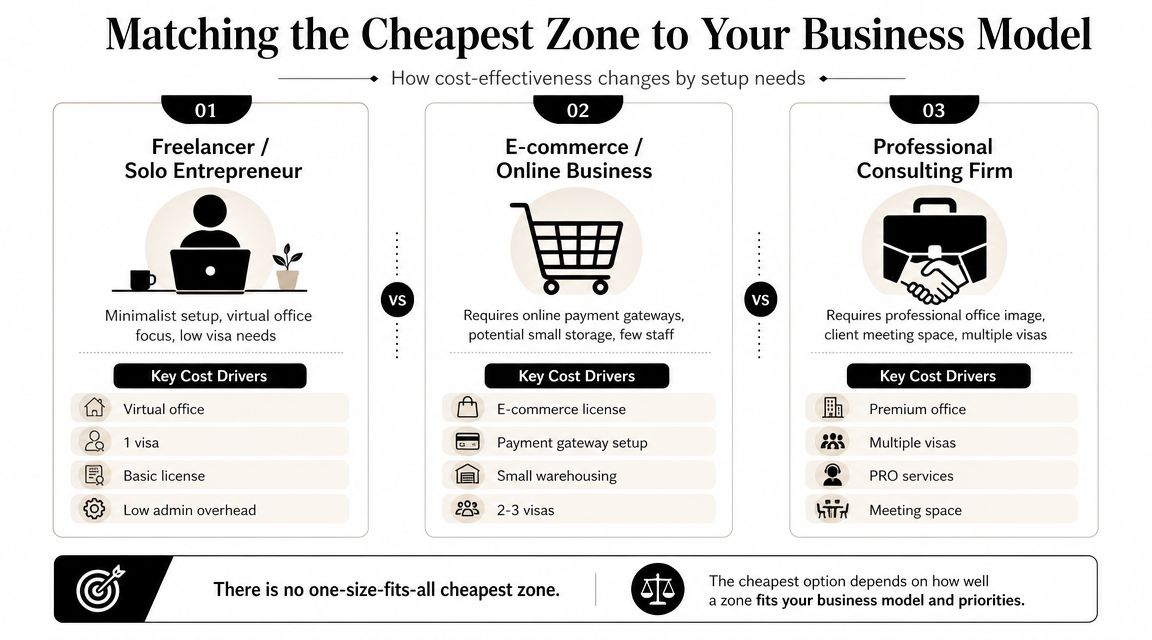
Most founders compare free zones based on the first invoice. A smarter comparison looks at the total cost of ownership.
That means thinking beyond the setup fee and asking what happens when you add a visa, need office space, open a bank account, update business activities, or grow from a solo operation into a small team. A free zone that looks cheapest for a one-person setup may not remain the cheapest once the business starts expanding.
Solo Freelancer with Minimal Overhead
For a genuine one-person business, choosing the lowest-cost package can still make financial sense.
This usually applies when the founder does not need employee visas, does not require physical office space beyond the minimum setup requirement, and operates in a straightforward service, consultancy, or media-based field.
In these cases, Ajman Free Zone and Sharjah Media City (SHAMS) are often among the first options worth comparing.
The trade-off is simple: the upfront savings only remain valuable if the business stays uncomplicated.
Best practical fit:
-
Sharjah Media City (SHAMS) for content creation, digital marketing, design, and media-focused businesses
-
Ajman Free Zone for founders prioritising the lowest possible setup cost for a basic service model
-
Sharjah Research Technology and Innovation Park for solo founders who want a lean setup with stronger positioning for technology, education, or advisory businesses
Lean Startup Planning to Hire
If you expect to hire employees, your decision should focus on expansion costs rather than launch costs.
The problem with ultra-low-cost packages is that they often only make the licence look attractive. As soon as the company needs additional visas, a larger office allocation, more business activities, or a stronger structure for clients and banking, the overall cost starts increasing.
Many founders save a small amount at incorporation, only to spend significantly more correcting the structure within the first year.
For startups planning to scale, the better choice is usually the free zone that supports growth without constant amendments or forced upgrades. This is where Sharjah Research Technology and Innovation Park often stands out. Its setup tends to support business expansion more smoothly as staff are added, services grow, and larger clients come into the picture.
The best decision is the one that still makes financial sense after your second visa and your first operational adjustment.
International Holding or IP Structures
Holding companies and intellectual property structures require a different approach to cost planning.
If the business will not need an immediate local team, a lower-cost licence can still work. But in these cases, the cost priorities shift quickly.
Banking scrutiny, legal structure, compliance expectations, and tax treatment often matter more than the initial registration cost. A package that looks efficient at setup can create expensive delays or restructuring later if the company’s activity, facility type, or legal structure does not support its intended purpose.
For this type of setup, founders should focus on three questions:
-
Does the legal structure properly support the holding or IP ownership strategy?
-
Will the chosen free zone provide the documentation and compliance support that banks or advisors are likely to request?
-
Can the company operate as planned without requiring a future migration or major structural change?
Founders who get this right usually spend a little more time choosing at the beginning — and far less money fixing problems later.
Hidden Costs That Can Turn a Cheap Free Zone Expensive
A low-cost setup often becomes expensive when the founder has to rebuild or upgrade it later.
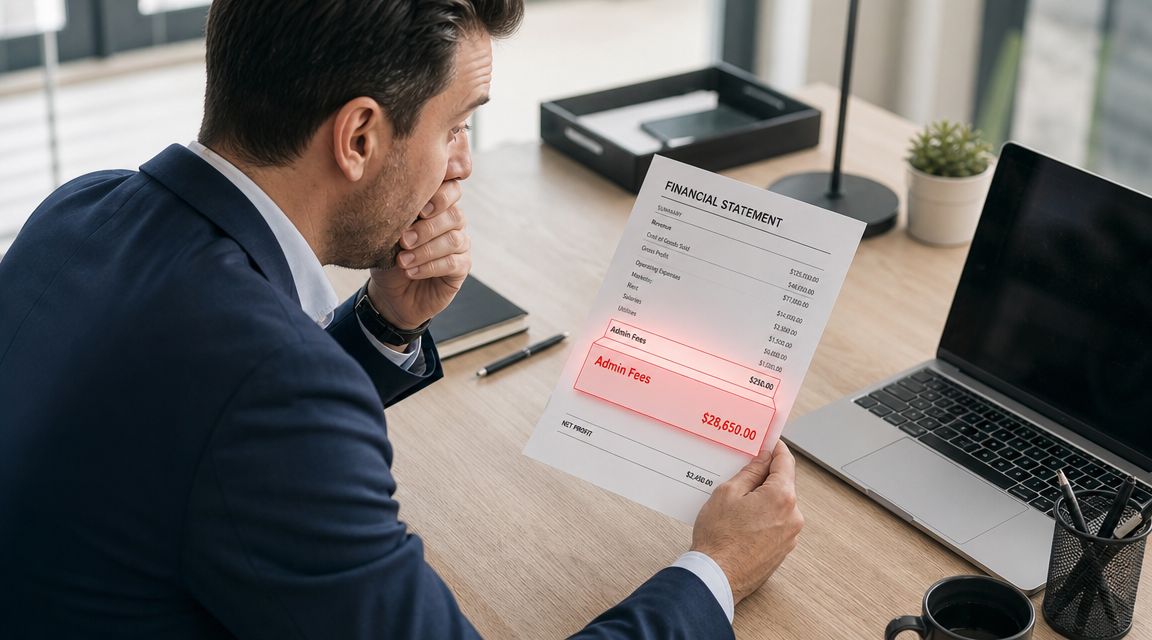
Activity Mismatch Can Lead to Costly Changes
One of the most common mistakes founders make is choosing a low-cost licence that does not properly match their actual business activity.
This usually happens when a founder selects a narrow activity simply because it is included in the cheapest package. Later, they realise they need additional activities, a different licence category, or a revised company structure to support contracts, invoicing, or payment gateway requirements.
Making these changes later almost always costs more than choosing the right setup from the beginning. It can also delay banking, visa processing, and business operations.
Some common warning signs include:
-
The business activity description is too vague or too broad to clearly support your operations.
-
The package looks cheap because it comes with strict limitations.
-
You already know at launch that future amendments will be necessary.
Choosing accurately at the start usually saves both time and money.
Tax Treatment Depends on More Than the Licence
Another common mistake is assuming that every free zone company automatically qualifies for the same tax advantages.
That is not always the case.
While UAE free zones offer attractive tax benefits, the final tax position depends on more than just the licence itself. Factors such as business activity, economic substance, and ongoing compliance all play a role.
This means a company that starts with the cheapest setup may later face extra costs if the structure needs to be adjusted to meet tax requirements.
If your long-term strategy depends on a specific tax outcome, it is better to review the legal and tax structure first rather than buying the licence and asking those questions afterward.
Banking and Business Substance Can Affect the Real Cost
The third issue is less about legal setup and more about practical operations.
A company may be fully incorporated and legally compliant, but still face challenges if the structure creates unnecessary friction with banks, payment providers, or business partners.
This is especially important for founders who expect regular transactions, larger clients, or international counterparties. If the business setup does not clearly show commercial substance or align with its intended activity, the hidden cost often appears in delayed bank approvals, additional compliance requests, or operational slowdowns.
A cheap setup only works if it can function smoothly in the real business environment — not just on paper.
This does not mean low-cost free zones are poor choices. It simply means founders should evaluate costs the way real operators do.
Saving money on the licence fee means very little if the business later loses time and money on avoidable restructuring, extra paperwork, office upgrades, or repeated compliance clarifications. Those hidden adjustments increase the real cost, even if the initial setup looked cheaper.
The most cost-effective setup is usually the one that works properly from day one — without needing to be fixed later.
Our Verdict: The Smartest Budget-Friendly Free Zone for 2026
There is no single “best” cheapest free zone in the UAE. There is only the cheapest option that fits your business correctly.
For solo founders looking for the lowest possible entry cost in media, digital, or creative industries, Sharjah Media City (SHAMS) remains one of the strongest choices. Its low starting cost and no-traditional-office structure make it especially attractive for lean service-based businesses.
For founders whose main priority is simply entering the UAE market with the lowest upfront spend, Ajman Free Zone continues to stay near the top of the list because of its affordable entry-level setup.
For businesses that may expand beyond a minimal structure, Sharjah Research Technology and Innovation Park often becomes the stronger long-term option. While its starting cost may be slightly higher, it can offer better value when growth, flexibility, and business positioning become important.
Use this framework before making a decision:
-
Choose the lowest-cost setup if you are a solo founder, your business activity is simple, and you do not expect immediate visa or office requirements.
-
Choose the best scaling setup if you expect to hire staff, face stronger banking reviews, or make future licence amendments.
-
Choose the strongest compliance-focused setup if your structure is built for holding assets, intellectual property, or international ownership rather than day-to-day local trading.
That is the practical way to approach it. Lower cost is valuable — but avoiding expensive rework matters more.
Get a Clear Cost Breakdown Before You Commit
Most founders do not need another generic free zone list. What they need is a realistic cost breakdown based on their business activity, visa requirements, and operating model.
That means reviewing the licence scope carefully, checking whether office space is optional or mandatory, understanding what immigration and compliance costs are included, and making sure the chosen free zone will not create avoidable banking or tax complications later.
A low headline fee only matters when it accurately reflects the business you are actually building.
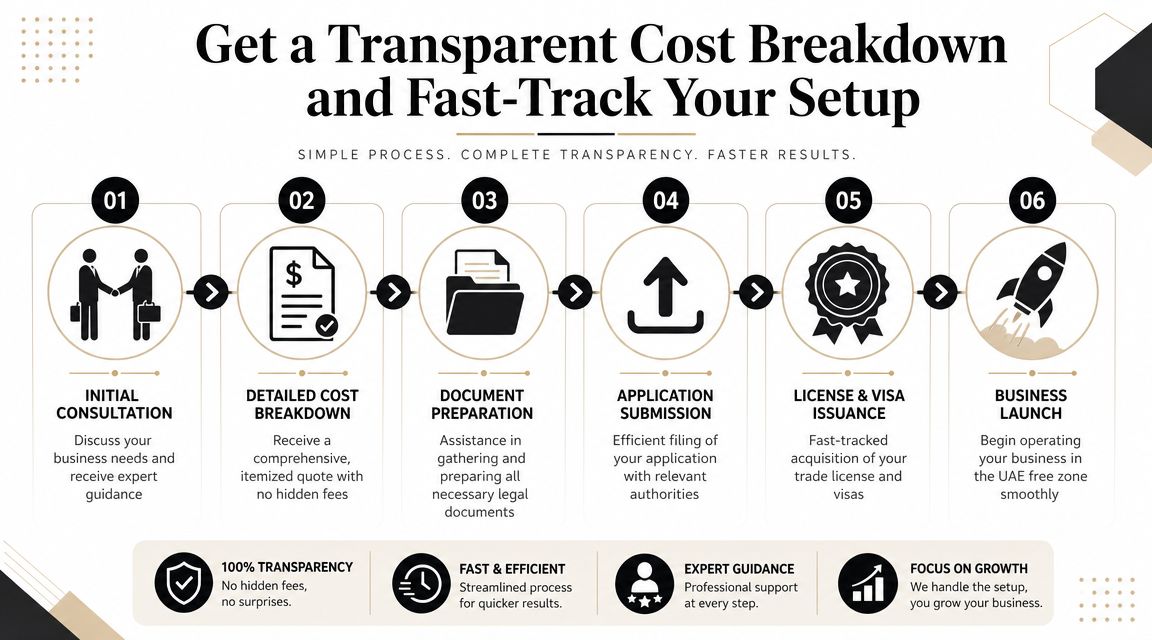
A strong company setup process should deliver four key things from the beginning:
A clear cost breakdown so you can separate licence fees from visa costs, workspace charges, and recurring annual obligations.
The right jurisdiction recommendation based on your business model not simply the free zone with the most aggressive marketing.
A realistic setup roadmap covering approvals, required documents, and operational readiness.
A structure built for stability so you do not need costly amendments or restructuring after incorporation.
The value of the right advisor is not just finding the cheapest licence. It is helping you avoid choosing the wrong one.
If you want a transparent, itemised quote instead of just a headline price, Inpro Corporate Services L.L.C. can help you compare UAE free zone options based on your business activity, visa requirements, banking plans, and compliance needs. Their team supports company formation, PRO services, visa processing, banking assistance, and ongoing tax and accounting coordination helping you choose the right setup from the start and avoid hidden costs later.